



Playing badminton is an accessible form of physical activity that helps increase energy expenditure, improve physical fitness, and support weight management when practiced regularly. The following article from MedFit will help you understand how to make the most of this sport for optimal weight loss results.
Does Playing Badminton Help You Lose Weight?
Playing badminton can support weight loss because it helps the body burn a substantial amount of energy, especially when played at high intensity and maintained regularly. The energy used during physical activity is commonly estimated using the MET index, where 1 MET corresponds to the energy expended at rest. The higher an activity’s MET value, the more energy the body requires to perform it.
MET by Intensity Level
| Recreational badminton | 5,5 MET |
| Competitive badminton | 7 MET |
| Competitive match-play badminton | 9 MET |
According to the reference MET table, recreational badminton is rated at 5.5 METs, competitive badminton at around 7.0 METs, and competitive match-play badminton can reach 9.0 METs.
The formula for estimating energy expenditure is: kcal = (MET × 3.5 × body weight in kg) / 200
This shows that the higher the playing intensity, the longer the exercise duration, and the greater the court movement, the more total energy is burned during a badminton session.
For example, for a person weighing 50 kg playing badminton for 30-60 minutes, estimated energy expenditure varies by intensity:
- Badminton at 5.5 METs: burns approximately 145-289 kcal
- Badminton at 7.0 METs: burns approximately 184-368 kcal
- Badminton at 9.0 METs: burns approximately 236-473 kcal
Therefore, badminton can be considered a form of physical activity that helps increase energy expenditure, thereby supporting weight management when maintained regularly. However, weight loss does not depend solely on the calories burned in a single session, but also on total daily calorie intake, exercise frequency, playing intensity, and long-term adherence.
From a research perspective, badminton is not a weight loss method on its own, but rather a form of physical activity that helps increase energy expenditure and support weight management when practiced regularly. A study on sedentary women found that recreational badminton for 8 weeks improved VO₂max, time to exhaustion, blood pressure, and resting heart rate, showing a positive impact on cardiorespiratory endurance and overall fitness. However, weight loss results still depend on an energy deficit.
Evidence from a meta-analysis of 116 clinical trials showed that aerobic exercise for at least about 150 minutes/week at moderate intensity or higher is associated with weight loss, waist circumference reduction, and reduced fat reduction fat. Therefore, playing badminton can support weight loss if maintained for a sufficient duration, at adequate intensity, and combined with an appropriate diet.
In summary, playing badminton can support weight management by increasing energy expenditure and improving physical fitness when practiced regularly. However, weight loss effectiveness still depends on total exercise duration, training intensity, and a diet that creates an appropriate energy deficit.

Playing badminton can support weight management by increasing energy expenditure and improving physical fitness when practiced regularly

Benefits of Badminton for Weight Loss and Body Tone
Badminton is a fast-paced sport that requires continuous movement, rapid changes of direction, lunging, jumping, and hand-foot coordination throughout play. As a result, it helps increase energy expenditure, support weight management, and improve overall fitness when maintained regularly.
Beyond helping burn calories, badminton also benefits cardiorespiratory endurance. During play, heart rate rises with each rally and movement, especially when reacting quickly, moving up to the net, retreating to the backcourt, or sustaining long rallies. Maintaining this form of exercise regularly helps the body adapt better to physical exertion, thereby improving stamina and overall physical performance.
In addition, badminton trains agility, balance, hand-eye coordination, and reflexes. Continuous forward, backward, lateral, pivoting, and directional movements help improve everyday physical mobility. This is an important benefit for anyone aiming to build an active lifestyle rather than exercising solely to lower the number on the scale.
In terms of physique, badminton can help tone the body by engaging multiple muscle groups across the legs, arms, shoulders, back, and core. However, to improve body composition more effectively, it is advisable to combine badminton with resistance training and adequate protein intake. This approach ensures weight management focuses not only on losing scale weight, but also on reducing fat, preserving muscle, and improving body shape sustainably.
Another advantage of badminton is how easy it is to sustain. It can be played with friends, family, or in groups, making workouts more enjoyable than monotonous routines. When people maintain a long-term exercise habit, weight management outcomes become more realistic and sustainable.
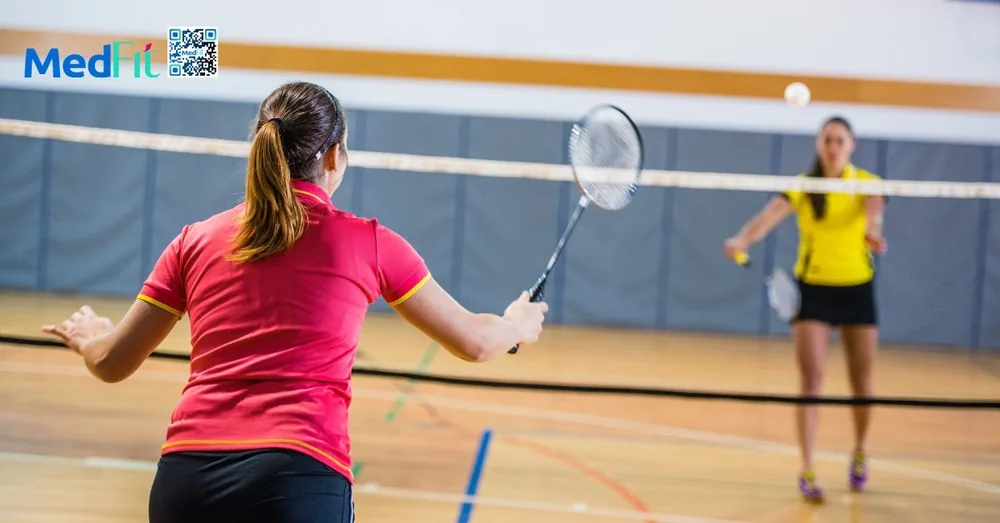
Badminton is easy to sustain because it can be played with friends, family, or in groups, making exercise more enjoyable

How to Play Badminton Effectively for Weight Loss for Beginners
To use badminton to support effective weight loss, beginners should not focus on playing excessively from the very first sessions. A more important goal is to build a consistent exercise habit, play within your capacity, increase intensity gradually, and accumulate enough weekly training time.
Beginners can start with 2-3 sessions/week, about 30-45 minutes per session. As fitness improves, duration can gradually increase to 45-60 minutes/session, aiming for a total of around 150 minutes/week—the commonly recommended level of moderate-intensity physical activity for adults. However, avoid increasing duration too quickly, as this can cause muscle soreness, knee pain, ankle pain, or early burnout after the first few sessions.
Each badminton session should begin with a 5-10 minute warm-up. You can rotate your wrists, shoulders, hips, knees, and ankles, perform light jogging in place, and move gently around the court. A proper warm-up helps prepare the body for exertion, lowers injury risk, and readies you for quick court movements.
During play, prioritize active footwork rather than standing in one spot hitting the shuttle back and forth. You can start with light rallies to find your rhythm, then gradually incorporate side-to-side footwork, net approaches, backcourt retreats, and returning to the center base after each shot. This style of play engages the whole body, elevates heart rate, and boosts energy expenditure.
Once accustomed to the intensity, you can apply interval-style pacing. For example, after a few minutes of light play, perform fast-paced rallies for 30-60 seconds, then slow down or take a brief rest before repeating. This helps increase calorie burn while remaining adjustable to your fitness level. If you experience dizziness, chest tightness, unusual shortness of breath, joint pain, or excessive fatigue, reduce intensity and rest rather than pushing through.
Finally, avoid the mindset of “I worked out, so I can eat whatever I want.” Compensating after a badminton session with bubble tea, sugary drinks, pastries, or high-calorie fried foods can easily push calorie intake past what was burned. For badminton to truly support weight loss, combine regular play with a calorie-controlled diet rich in protein and vegetables, along with adequate hydration.

For badminton to truly support weight loss, combine regular play with a calorie-controlled diet rich in protein and vegetables, along with adequate hydration

Nutrition Tips When Playing Badminton for Weight Loss
Badminton has long been recognized as a versatile, accessible activity that effectively supports weight management. However, to make weight loss not only faster but also sustainable, you should not rely on badminton alone. Adding resistance training helps preserve and build muscle mass, improve energy metabolism, and create a firmer physique.
Alongside exercise, nutrition remains the decisive factor in weight loss success. A scientifically sound diet should maintain an appropriate energy deficit while providing enough protein to support muscle tissue, paired with leafy greens, fruits, and quality carbohydrate sources. Limiting foods high in sugar, unhealthy fats, and calorie-dense beverages also improves weight management.
When badminton, resistance training, and proper nutrition are balanced together, weight loss becomes far more comprehensive. Beyond the number on the scale, you can improve physical stamina, enhance agility, tone your body, and maintain an active lifestyle long term.

Consult a nutrition specialist on a safe, effective weight-loss diet
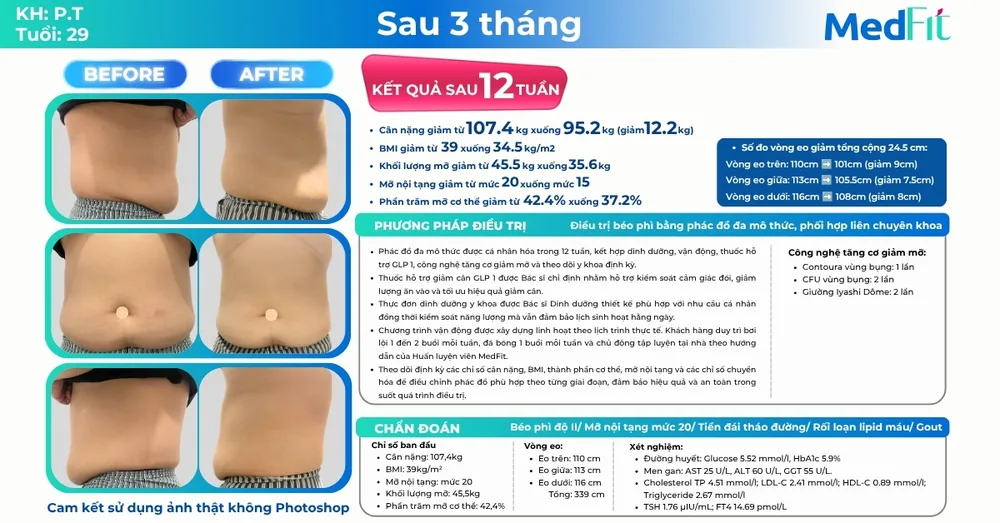
Weight-Loss Clinical Cases at MedFit Clinic
Playing badminton can support weight management by increasing energy expenditure, improving cardiorespiratory endurance, and maintaining a regular exercise habit. However, effective weight management does not depend on this activity alone; it requires combining a calorie-deficit nutrition plan, resistance training, adequate sleep, and scientific progress tracking. For beginners or those with underlying medical conditions, selecting an appropriate training intensity is essential to ensure safety and achieve sustainable results.
If you are aiming for weight management but do not know where to start, MedFit can help. At MedFit, a Physician evaluates your overall health, a Nutrition Specialist develops a suitable meal plan, and a coach designs a workout program tailored to your physical condition. This coordination helps personalize your plan for weight management in a scientific, safe, and sustainable way.
References
- Adult Compendium of Physical Activities. (2024). Sports. [online] Available at: https://pacompendium.com/sports/ [Accessed 10 October 2026]
- Jayedi A, Soltani S, Emadi A, Zargar MS, Najafi A. Aerobic exercise and weight loss in adults: a systematic review and dose-response meta-analysis. JAMA Netw Open. 2024;7(12). doi:10.1001/jamanetworkopen.2024.52185
- Patterson S, Pattison J, Legg H, Gibson AM, Brown N. The impact of badminton on health markers in untrained females. J Sports Sci. 2017;35(11):1098–1106. doi:10.1080/02640414.2016.1210819
Cabello-Manrique D, Lorente JA, Padial-Ruz R, Puga-González E. Play badminton forever: a systematic review of health benefits. Int J Environ Res Public Health. 2022;19(15):9077. doi:10.3390/ijerph19159077