





Weight loss is not just about eating less or exercising more. To achieve sustainable results and avoid unnecessary mistakes, it is essential to understand how much energy your body needs each day, your current weight status, and how to adjust accordingly. Metrics such as TDEE, BMR, and BMI serve as foundational tools for determining calorie needs and metabolic rate, making it easier to set realistic goals tailored to each individual. Whether your goal is fat loss, muscle gain, or weight maintenance, understanding these metrics and using the BMI, BMR & TDEE Calculator will help you build a scientific plan that saves time and protects your long-term health.
Calculate Your BMI
BMI (Body Mass Index) is a measurement used to evaluate whether a person is underweight, normal weight, or overweight based on the correlation between weight and height. It is a simple, accessible tool to assess body status and provide early warning of obesity risk.
BMI Formula:
BMI = [cân nặng (kg)] ÷ [chiều cao (m)]2
Example: a person who is 1.6m tall and weighs 60kg has a BMI = 60 ÷ 1.62 = 23,4
The BMI classification for Asian populations, adapted based on World Health Organization (WHO) research and regional health characteristics, is shown in the table below:
| Classification | BMI (kg/m²) |
| Underweight | < 18,5 |
| Normal | 18,5-22,9 |
| Overweight | 23-24,9 |
| Obesity Class I | 25-29,9 |
| Obesity Class II | 30-34,9 |
| Obesity Class III | ≥ 35 |
Note: BMI only reflects overall body mass and cannot distinguish between muscle and fat. Therefore, individuals who do intense strength training may have a high BMI without excess body fat. For a more accurate assessment, combine BMI with body fat percentage measurement (such as via InBody).
Calculate TDEE to Determine Daily Calorie Needs
TDEE stands for Total Daily Energy Expenditure, which is the total amount of energy your body burns in a day to sustain all life activities. This metric includes not only the baseline energy required for breathing, heartbeat, and digestion, but also the energy expended during physical exercise, work, daily routines, and food digestion.

You can think of TDEE as your body’s maintenance calories:
- If you eat exactly your TDEE each day, your weight will stay the same.
- If you want to lose weight, you need to consume fewer calories than your TDEE.
- If you want to gain weight, you need to consume more than this level.
General TDEE Formula:
TDEE = BMR × AF + E (exercise) + E (special)
Where:
- BMR: the basal metabolic energy your body needs to stay alive
- Activity Factor (AF): reflects your daily physical activity level
- E (exercise): calories burned from sports and physical activities
- E (special): additional energy required in conditions such as pregnancy, breastfeeding, fever, or medical treatment…
Breakdown of TDEE Components:
1. BMR (Basal Metabolic Rate)
BMR stands for Basal Metabolic Rate. It is the minimum number of calories your body requires to sustain vital functions such as breathing, circulation, temperature regulation, and the activity of internal organs when completely at rest. This is a key baseline metric that helps determine the energy needed to build a proper weight loss meal plan or weight gain plan.
The Harris–Benedict equation for calculating BMR is as follows:
- For women: BMR = 655 + (9.6 × weight) + (1.8 × height) – (4.7 × age)
- For men: BMR = 66 + (13.7 × weight) + (5 × height) – (6.8 × age)
Where weight is in kg, height is in cm, and age is in years.
2. Activity Factor (AF)
The Activity Factor reflects your daily level of physical activity. Below are the multipliers applied based on activity intensity:
| Activity Level | Activity Factor |
| Sedentary (office worker, cashier) | 1,2 |
| Light (retail, sales…) | 1,375 |
| Moderate (cleaning, hospitality/service…) | 1,55 |
| Active (farmer, construction worker…) | 1,725 |
| Very active (loader, athlete…) | 1,9 |
3. Exercise Energy Expenditure – E (exercise)
Each type of exercise burns a different number of calories. Below are estimated burn rates by intensity:
| Intensity | Examples | E (exercise) |
| Light | Walking, yoga, golf… | approx. 200 kcal/hour |
| Moderate | Badminton, basketball, tennis… | approx. 300 kcal/hour |
| Vigorous | Sprinting, swimming, boxing… | approx. 400 kcal/hour |
4. Special Energy Requirements – E (special)
Applies to specific physiological states such as pregnancy or breastfeeding:
| Condition | Additional Energy |
| First trimester of pregnancy | + 50 kcal/day |
| Second trimester of pregnancy | + 250 kcal/day |
| Third trimester of pregnancy | + 450 kcal/day |
| Breastfeeding | + 500 kcal/day |
Example: Ms. B (30 years old), weighing 55kg, 1.65m tall, works in retail (light activity), practices yoga daily, and is currently in her 4th month of pregnancy. Therefore:
- BMR = 655 + (9,6 × 55) + (1,8 × 165) – (4,7 × 30) = 1339kcal
- AF = 1.375
- E (exercise) = 200 kcal
- E (special) (2nd trimester) = 250 kcal
→ TDEE = BMR × AF + E (exercise) + E (special) = 1,339 × 1.375 + 200 + 250 = 2,289 kcal/day
This means that if Ms. B consumes around 2,289 kcal/day, she will have enough energy for herself and fetal development without gaining with overweight unnecessarily.

What Is the Macronutrient Ratio (Protein, Carbs, Fat) and How to Apply It
Once you know your daily calorie needs through your TDEE, the next step is to divide those calories into three main nutrient groups: protein, carbohydrates, and fat. These are the three primary components in food, also known as macronutrients, which play a decisive role in weight loss outcomes as well as overall health.

WHO Recommended Ratios:
- Protein: 10–35% of total energy
- Carbohydrates: 45–65% of total energy
- Fat: 20–35% of total energy
How to Convert Percentages into Grams per Day:
- 1g protein = 4kcal
- 1g carbohydrate = 4kcal
- 1g of fat = 9 kcal
Example: a person with a TDEE of 1,800 kcal chooses the ratio:
- 20% protein → 1,800 × 20% = 360 kcal → 360 ÷ 4 = 90g protein
- 50% carbohydrate → 1800 × 50% = 900kcal → 900 ÷ 4 = 225g carbohydrate
- 30% fat → 1,800 × 30% = 540 kcal → 540 ÷ 9 = 60g fat
Based on this, you can flexibly adjust your menu to match your body condition and goals. If stricter control is needed, you can use a food tracking tool or work with a specialist to create a personalized meal plan.
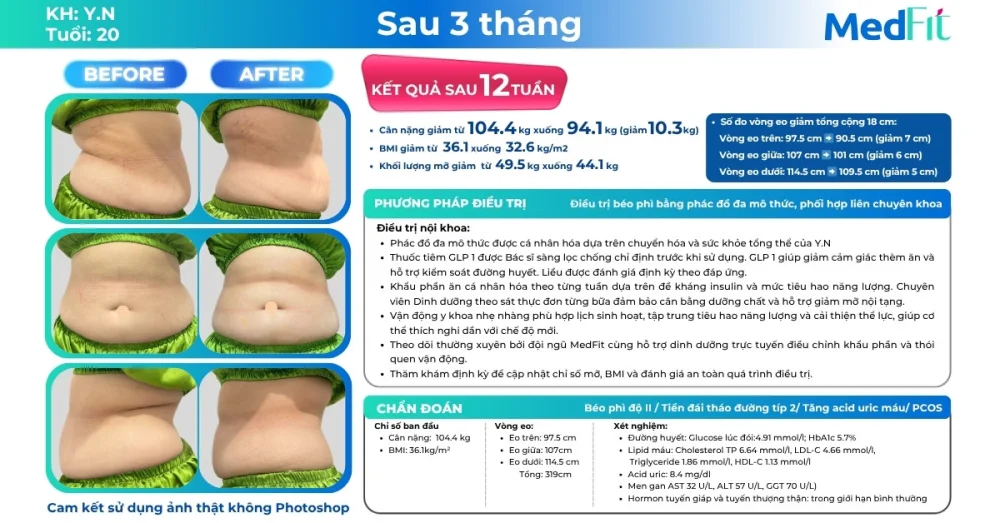
Understanding metrics like BMI, BMR, and TDEE helps you move away from guesswork dieting and build an evidence-based, safe, and personalized nutrition and exercise plan. If you are still unsure how to calculate them or which diet suits your body condition, do not hesitate to contact MedFit qua hotline 0899.090.838. Our team of doctors along with nutrition and exercise specialists will accompany you on your effective and sustainable weight loss journey.